Imagine packing up your last box, excited for the new place, only to get hit with a $500 ding on your deposit for “cleaning” you swear you handled. It happens too often. Security deposits average $1,000 to $2,000, and landlords must return them minus real deductions. Small slips cost renters big.
You can avoid that mess. Follow these steps before leaving a rental property: give notice, clean deep, document everything, fix issues, schedule a walkthrough, and watch for pitfalls. Laws differ by state as of March 2026, so check yours. You’ll dodge surprise bills and get your full refund with peace of mind.
Give Your Landlord Clear Written Notice First
Start here to protect yourself from extra rent charges. Most states demand 30 days’ notice for month-to-month leases. Florida requires 15 days before the rental period ends. Always review your lease for the exact timeline.
Send notice in writing. Use certified mail or email if your lease allows it. This creates proof. Without it, disputes arise fast.
Here’s how to do it right:
- State your move-out date clearly.
- Include your name, address, and contact info.
- Mention the lease end or notice period.
- Ask for a final walkthrough.
Sample language works well: “I am giving notice to vacate [unit address] on [date], per our lease terms.” Keep a copy.
Also, set up mail forwarding with the post office. Pay your final rent and utilities on time. Move out on the last day of rent to avoid overlaps. For state rules, check notice to vacate requirements by state.
Landlords appreciate clear heads-up. It smooths the handover. You stay in good standing for references too.
Deep Clean Every Room Using This Simple Checklist
Landlords expect “move-in ready” condition. That means spotless, like you found it. Skip this, and they deduct from your deposit. A good clean takes a day or two but saves hundreds.
Focus on every room. Take before-and-after photos too. Replace light bulbs. Test smoke detectors. Change air filters if you can. Trash goes out last.
You’ll feel good seeing it sparkle. High-traffic spots get extra attention because they show wear first.
Tackle Kitchen and Bathroom Grime Head-On
These areas draw the most scrutiny. Grime builds up fast.
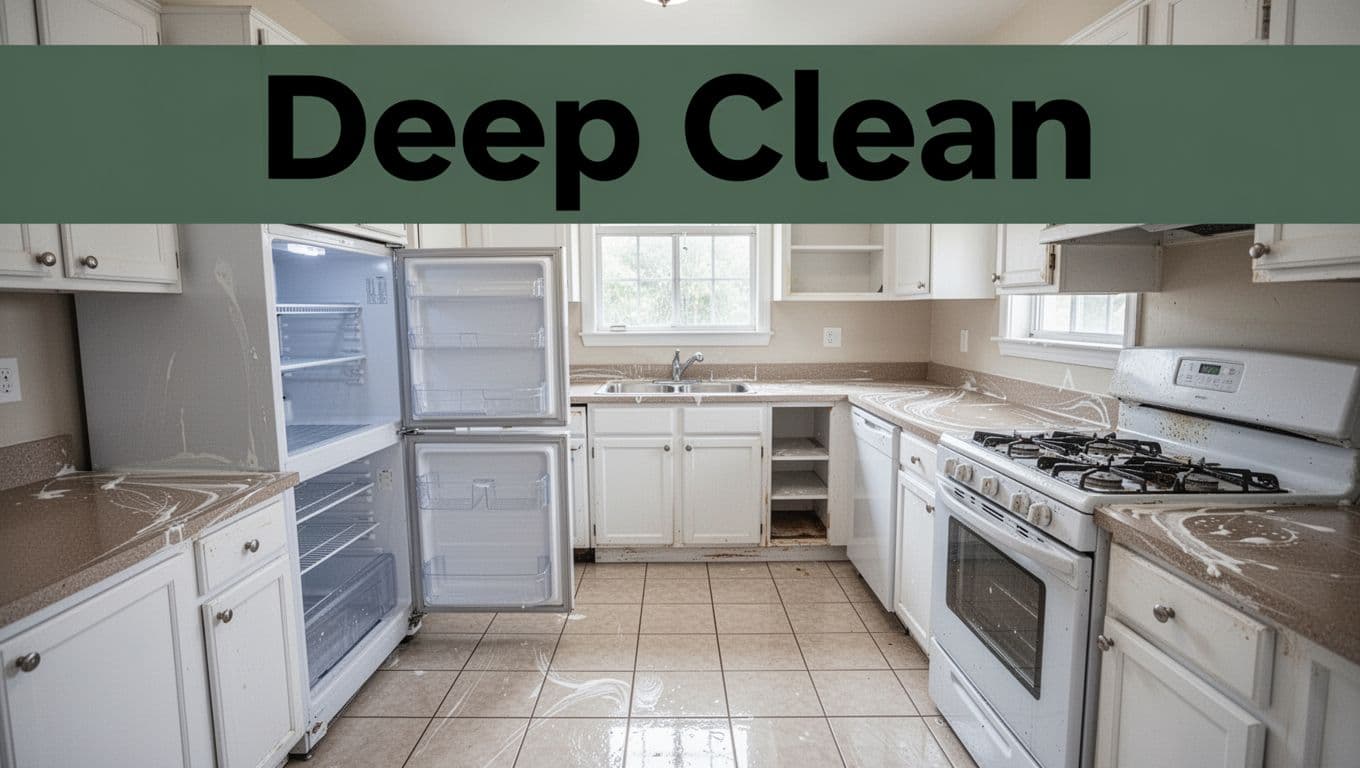
In the kitchen, wipe counters and cabinets inside out. Scrub the sink and faucet. Clean the stove top and oven. Defrost and empty the fridge; wipe shelves dry. Scrub the microwave inside. Mop floors shiny.
Bathrooms need the same love. Scrub tub, toilet, and sink. Polish mirrors streak-free. Clean grout and tiles. Empty cabinets. Mop floors last.
Use bleach on tough spots, but rinse well. Dry everything to prevent mold claims.
Refresh Bedrooms, Living Spaces, and Outdoors
Vacuum carpets deep, then mop hard floors. Dust shelves, baseboards, and ceiling fans. Wipe windows inside. Clean light fixtures.
Remove all marks or scuffs. No pet hair anywhere. Empty closets fully.
Outside, sweep walkways if required. Pick up yard trash. Hose patios clean.
Personal items must go. Double-check drawers and sheds.
Snap Photos and Keep Records to Prove You’re Covered
Documentation wins fights over deposits. Landlords sometimes claim damage that isn’t yours. Photos and videos back you up.
Start before cleaning. Shoot every room, appliance, wall, floor, and yard. Use good light from multiple angles. Timestamp files on your phone.
Capture during and after too. Video walkthroughs add weight. Courts favor this proof.
Save key papers:
- Your lease agreement.
- Rent receipts.
- Repair requests you sent.
- Move-in inventory if you have it.
Store everything digital and printed. Email copies to yourself. This covers you if mail gets lost.
In short, records turn “he said, she said” into facts. You get paid faster.
Fix Minor Issues and Set Up the Final Walkthrough
Not all flaws cost you. Normal wear happens over time. Fix small stuff yourself to show good faith.
Patch nail holes with spackle. Touch up paint if minor. Tighten loose handles. Report big problems in writing first, like leaks.
Request a joint walkthrough right after move-out. Use a checklist. Note conditions together and sign it. If they skip, do it solo with photos.
This seals the deal. No room for later arguments.
Know What Counts as Normal Wear and Tear
Landlords can’t charge for everyday use. Small nail holes from pictures? That’s normal. Faded paint or carpet wear from foot traffic? No deduction.
Minor scuffs on doors qualify too. But broken windows or large holes? That’s damage on you.
States define it clearly. For examples, see normal wear and tear vs excessive tenant damages. Know the line to push back.
Secure Your Security Deposit Return Without Delays
Landlords must return deposits in 14 to 60 days, depending on state. Expect an itemized list with receipts for any deductions like cleaning or unpaid rent.
Pay final bills first. That speeds things up. Florida allows email returns if agreed.
If deductions seem off, dispute in writing. Small claims court handles stubborn cases. Keep your proof ready.
Check your state’s rules at sites like your attorney general’s office. For instance, security deposit return laws by state lists deadlines.
Most get full refunds when prepared. Patience pays off.
Skip These Costly Mistakes Most Renters Regret
Rookies lose money on simple errors. Avoid them.
- No written notice: You owe extra rent. Always document.
- Half-hearted cleaning: Leads to holds. Scrub like pros inspect.
- Skipping photos: Can’t prove condition. Timestamp everything.
- Leaving stuff behind: Storage fees pile up quick.
- Ignoring utilities or lease end: Bills surprise you later.
- No walkthrough: They claim issues post-move.
Florida renters note shorter notice but strict deposit rules. Everything in writing saves headaches. Test detectors before leaving.
Don’t let these trip you.
Follow these steps, and you’ll leave smooth. Give notice early. Clean thorough. Snap photos everywhere. Fix minors. Walk through together. Know deposit timelines.
Create your checklist today. Laws vary, so verify with your state attorney general. Share your tips in comments below. Subscribe for more renter hacks, like finding your next spot.
Walk away with your deposit intact. You got this.