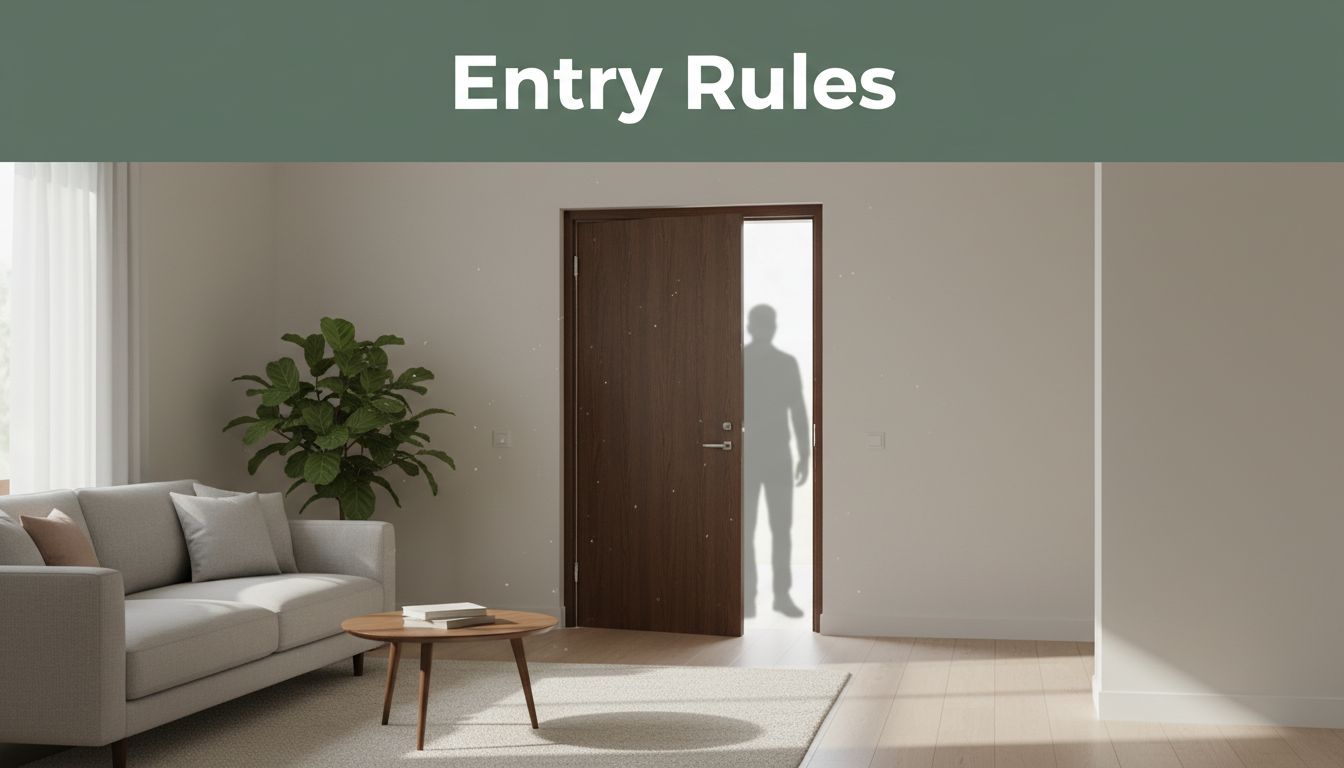
You come home after a long day, kick off your shoes, and freeze. Your landlord stands in your living room, poking around without a word. Heart racing, you wonder: Can a landlord enter your home without permission?
Landlords own the property, sure. But you pay rent for privacy and quiet enjoyment. No federal law spells out entry rules across the US. Instead, states set the standards, and most demand advance notice for non-emergencies. Emergencies change everything, though. Your lease might add details, but it can’t override state law.
This post breaks it down. You’ll learn the notice rule, exceptions, state differences, and steps if rules break. Most times, landlords need notice and a solid reason. Or it’s illegal. Check your lease and local laws first. That knowledge puts you in control.
The Golden Rule of Landlord Entry: Always Give Notice First
Landlords can’t just walk in whenever they want. In most states, they must give reasonable notice before entering for routine stuff. Think 24 hours as the standard. That covers repairs, inspections, or showings.
Reasonable notice means clear details. It states the date, time window, and purpose. Entry happens during normal business hours, like 8 a.m. to 6 p.m. Without this, they violate your privacy rights. For example, a scheduled furnace check with notice? Fine. A surprise pop-in to “see how things look”? No way.
This rule protects you from harassment. It keeps disputes low. Landlords get access to their property. You keep peace at home.

What Counts as Proper Notice? Get It in Writing
Proper notice starts with writing. Email, text, or a posted note works best. It creates proof if things go wrong. Verbal warnings might count, but they’re risky.
Include key info. Say the exact date and time, like “Tuesday, 2 to 4 p.m.” Add the reason, such as “plumbing inspection.” Give at least 24 hours. Respond if you need to reschedule. Most landlords cooperate.
In short, written notice builds trust. It avoids “he said, she said” fights.
Allowed Reasons for Entry With Notice
Landlords need a valid purpose too. Common ones include repairs, maintenance, and inspections. They can check for damage or code issues.
Showings count for buyers or new tenants. Pest control fits as well. Each requires notice. You can ask to be present. Or request photos of work done. That way, you stay informed without stress.
Besides, refuse entry only for good cause. Unreasonable blocks hurt your case later.
True Emergencies: When Notice Isn’t Needed and Entry Is Okay
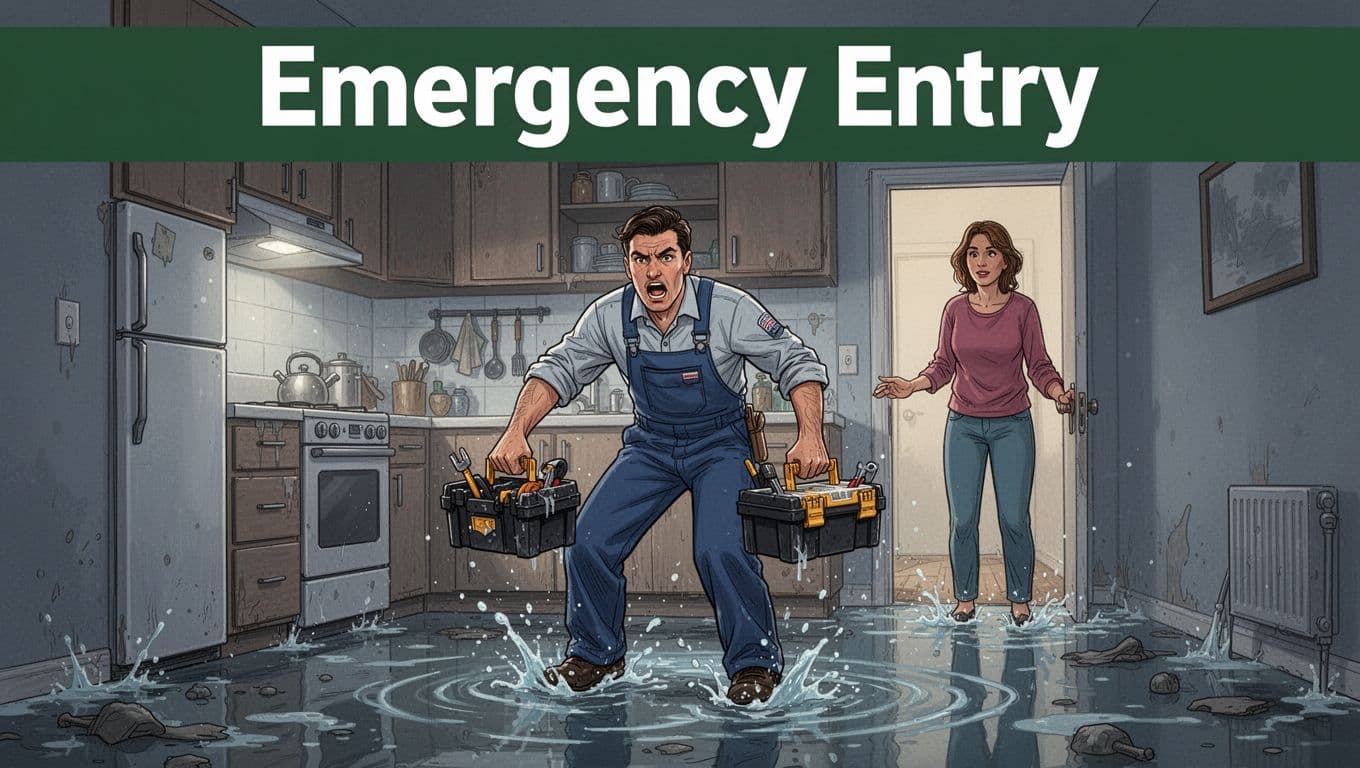
Emergencies flip the script. Landlords enter right away if danger looms. No notice required in all 50 states. Think burst pipes flooding your kitchen. Or a gas leak risking explosion.
Abandonment qualifies too. If rent stops and signs show you left, they check. Tenant permission on the spot works as well. After entry, they notify you fast.
These cases stay rare. Landlords prove the threat. You question anything fishy.
Spotting Real Emergencies vs. Excuses
Real emergencies scream urgency. Smoke alarms blare. Water damages walls fast. Health risks like mold outbreaks demand action.
Excuses don’t cut it. Forgot rent? Not urgent. Want to impress friends? Absolutely not. Document suspicions with photos and notes.
If disputed, courts side with proof. You hold the power here.
State Rules Vary: Know Your Local Laws Before a Dispute
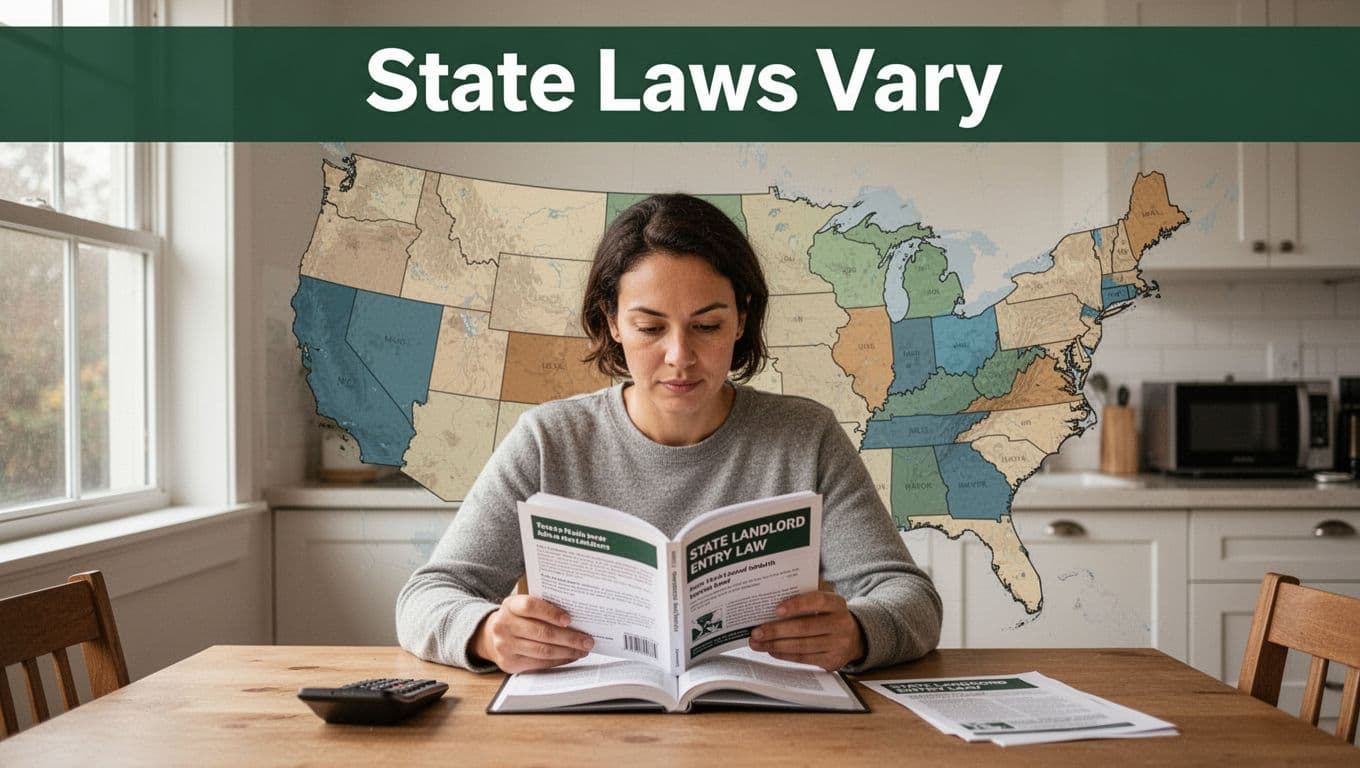
No one-size-fits-all rule exists. States handle entry laws. Leases fill gaps but follow state minimums. Search “[your state] landlord entry laws” for details.
For example, landlord entry rules by state show 24 hours as common. Some need 48. Others leave it vague.
Kansas updated in 2026. A new bill sets 24 to 48 hours written notice. It tightens prior loose rules.
Here’s a quick comparison of key states:
| State | Notice Required | Key Details |
|---|---|---|
| California | 24 hours | Written, with reason and time window |
| New York | Reasonable (24 hours typical) | Business hours only |
| Texas | Reasonable | No fixed time; purpose matters |
| Florida | 12 hours | For repairs, showings; can’t deny unreasonably |
| Kansas | 24-48 hours (2026 bill) | Written for non-emergencies |
Differences matter in court. Proof wins cases.
Spotlight on High-Renter States Like California and New York
California stays strict. Demand 24 hours written notice. Limit to specific reasons. Courts favor tenants with records.
New York requires reasonable notice, often 24 hours. Stick to 9 a.m. to 5 p.m. Emergencies allow instant access.
Texas and Florida offer more flex. Texas says “reasonable.” Florida sets 12 hours. Still, tenants win with evidence.
Check resources like landlord entry laws by state for your area. Local rules add layers.
Landlord Broke the Rules? Here’s How to Fight Back and Win
Illegal entry happened. Stay calm. Document everything first. Note date, time, what they did. Snap photos of damage or forced locks. Get witness statements.
Talk to your landlord next. Send a polite written demand to stop. Cite state law. Most back off.
Escalate if needed. Contact your local housing authority. File with HUD or state attorney general. Sue for privacy invasion. You might get rent cuts or damages.
Lease clauses can’t weaken state protections. Install legal security cams in common areas. Grab renter’s insurance too.
Tenants win often. One study shows proof leads to settlements. Act fast. You reclaim control.
For limits on entry, see landlord right of entry notice requirements.
Document and Report: Your First Line of Defense
Start a log. Detail the incident. Notify landlord in writing within days.
File complaints next. Use HUD offices or state agencies. They investigate free.
Success comes from records. Keep copies. Follow up.
Know the Rules, Protect Your Space
Landlords need notice most times. Emergencies prove rare exceptions. State laws differ, so check yours. Documentation turns disputes your way.
Review your lease today. Bookmark tenant right to privacy and landlord entry rules. Share this with friends.
Informed renters hold power. What’s your state’s rule? Drop a comment below. Sign up for more tenant tips.